ETL Pricing Decoded: What Are You Actually Paying For?
August 24, 2026
Have you ever looked at an ETL bill and wondered, “Wait, why did this go up?” Your data volume may not have changed dramatically, but your bill sure did.
It usually starts with adding a few sources or starting to update certain tables more often and those small changes are showing up on a big bill.
So before you compare ETL tools on price, it’s worth understanding what actually drives your bill. Read ahead!
Want more practical insights on data, ETL, and the costs behind your data stack? Subscribe to get the latest editions delivered straight to your inbox!
1. Start with what you're actually being charged for
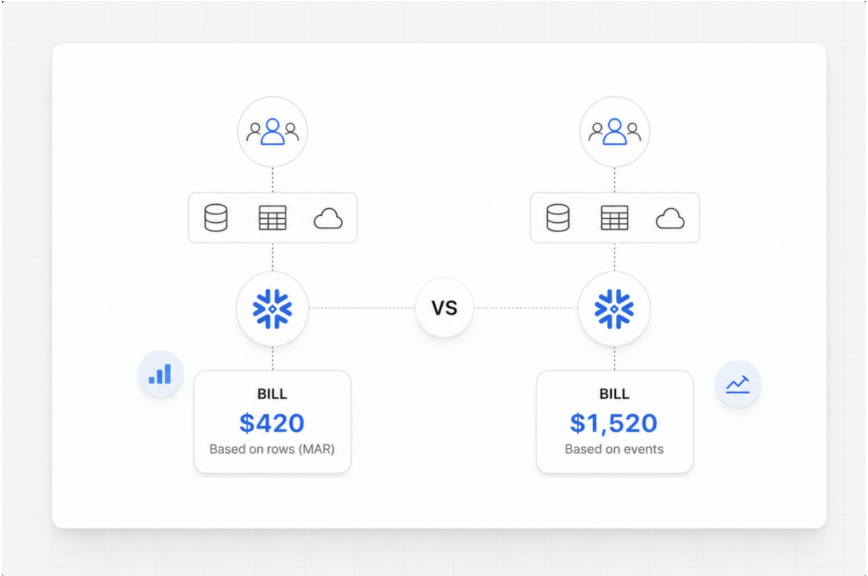
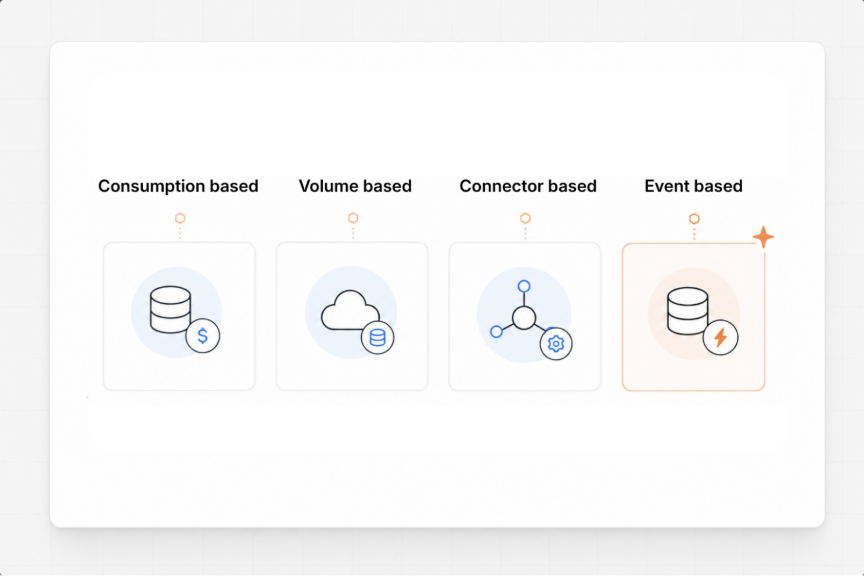
Before comparing prices, find out what the vendor is measuring. Some tools charge based on rows or Monthly Active Rows. Others charge by events, credits, data volume, or compute time.
This matters because two teams moving the same amount of data can end up with very different bills depending on how their vendor counts usage.
Want to understand the different ETL pricing models?
Once you know what you're being charged for, go back and look at how your data actually behaves.
If you have a few large tables that barely change, paying based on changed rows might work well. If those tables are constantly being updated, the same model can look very different on your monthly bill.
3. Look for the things that can quietly push up your bill
This is where ETL pricing gets interesting. A re-sync might count the data again, while running a pipeline across three environments could mean paying for three sets of connectors. Moving data across regions can also add egress costs, and support may cost more if you need faster response times or a dedicated team
None of these are necessarily deal-breakers, but you should know about them before they show up on your invoice.
Want a closer look at the costs that are easy to miss?
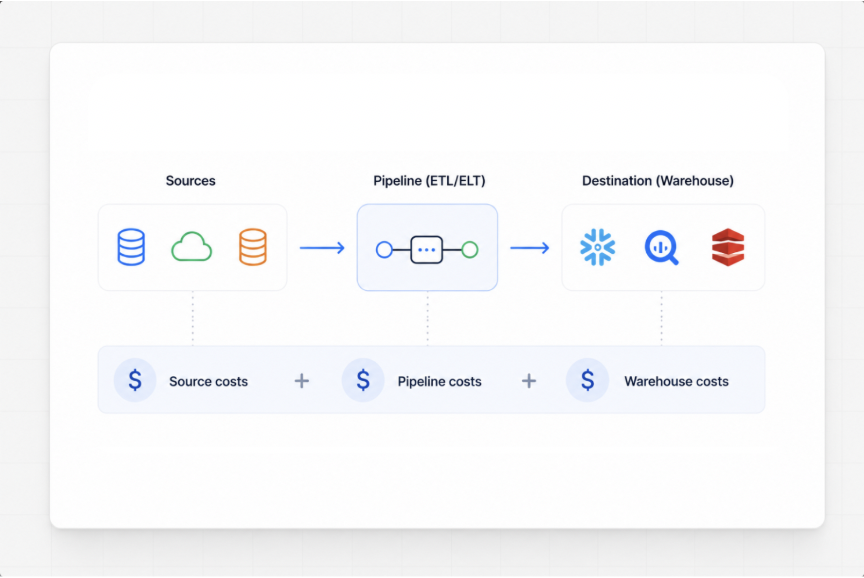
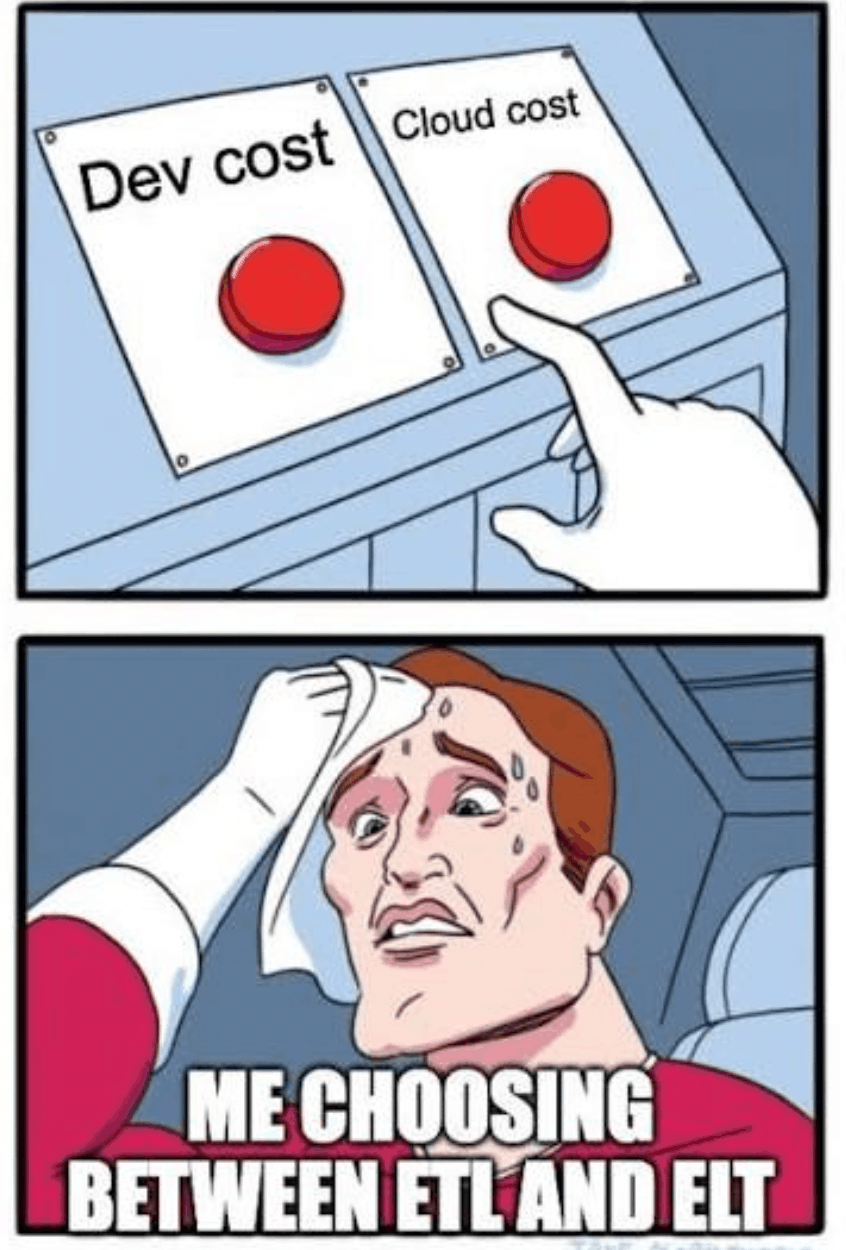
Your ETL bill isn't the only bill your pipelines can affect. With ELT, a lot of the processing happens in the warehouse, so the way your pipelines load and transform data can also affect what you spend on Snowflake, BigQuery, or another warehouse.
This is why looking at the ETL subscription on its own can be misleading. A tool that costs less upfront can still create more work or more warehouse spend elsewhere.
Want to see what goes into the full cost of running a data pipeline?
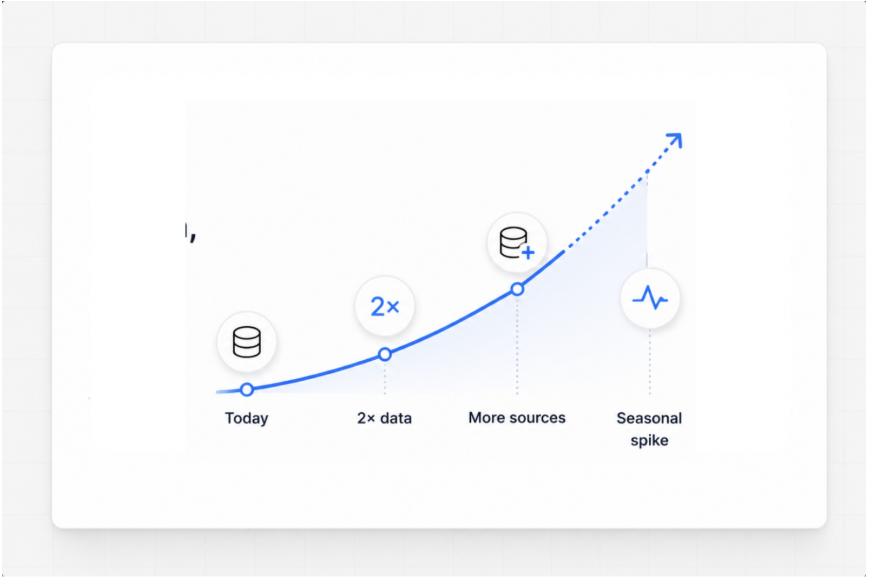
Before you sign up, run the numbers for where your data is going, not just where it is today. What happens at 2× your current volume? What happens when you add the sources already sitting on your roadmap? What happens during a seasonal spike?
You should know what happens to your costs when your workload changes.
Want to see what your ETL setup could cost as your data grows?
ETL pricing gets easier to understand once you stop looking at the headline price and start looking at what drives it.
Know what you're being charged for. Make sure it fits the way your data behaves and then check the costs that sit around the ETL platform, especially your warehouse and the growth you expect over time.
That's a much better way to figure out what you're actually going to spend. If you want to dig deeper
Become part of a growing community of data leaders including Matt Forrest, James Serra, Amney Mounir, and Mark Freeman, and get recognized for the work you're doing. Applications are now open