Start for Free Schedule a Demo

EDITION-4

Buying an ETL Tool? Here's the Ultimate Guide to Making the Right Choice.

July 22, 2026

Buying an ETL tool can get confusing pretty quickly. You sit through a few demos, compare pricing, look at connector lists, and before long, every platform starts sounding the same.
That's why we think the better question isn't "Which ETL tool should I choose?" It's "How do I know this is the right one?"
Here are five simple tests that'll help you find the answer!

1. Understand Its Performance at Scale

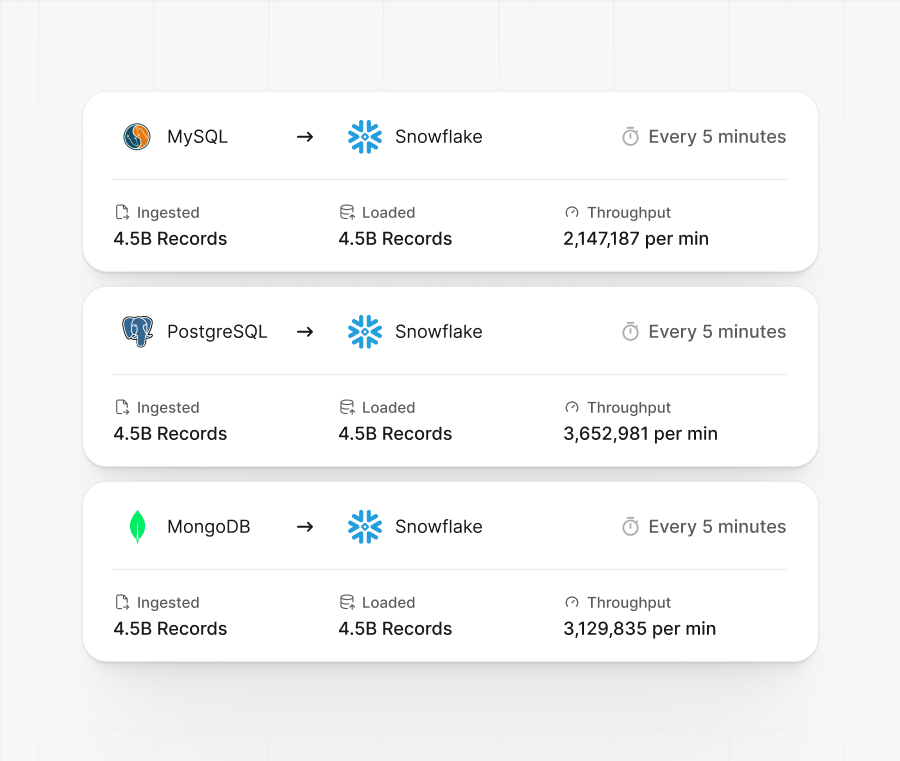
As data volumes grow and AI applications demand fresher data, your ETL platform should be able to process data quickly without sacrificing reliability or driving up costs.
The main goal is to choose one that consistently meets your data freshness requirements today and can scale as your workloads grow. Understand how the platform performs with larger datasets, historical loads, and increasing pipeline volumes, not just how fast it is under ideal conditions.
Curious how we improved historical load performance by over 4×? See how our engineering team identified bottlenecks and optimized every stage of the pipeline.

2. Stop comparing connector count

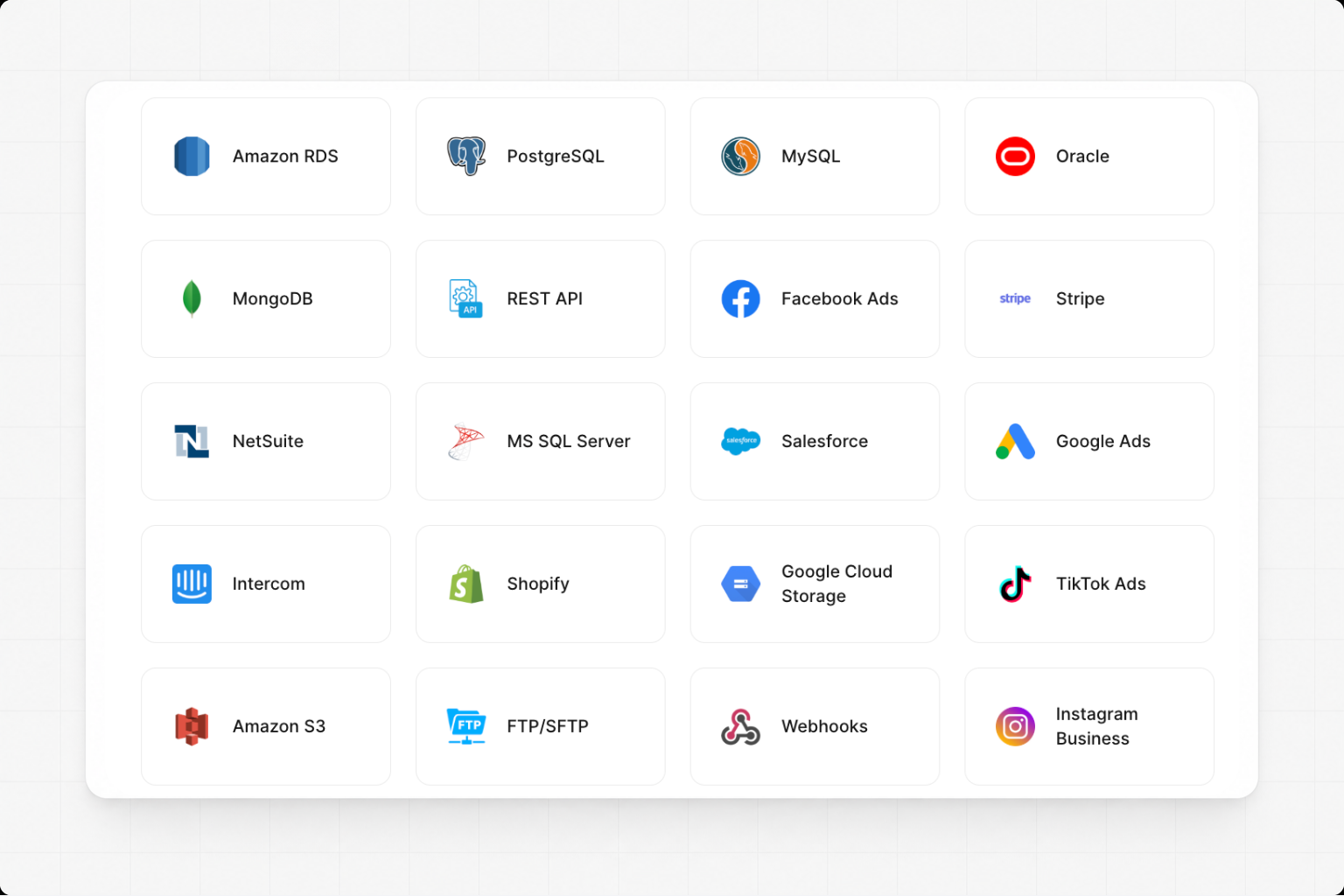
Almost every ETL platform advertises the number of connectors it supports. But with more than 200,000 business applications in existence, no vendor comes close to complete coverage. Whether a platform offers 150 connectors or 500, you'll eventually need one it doesn't have. That's why connector count is the wrong metric to optimize for.
A better metric is Custom Connector Turnaround Time (TAT): how quickly a vendor can build and maintain a new connector when your business needs one. Just as important is connector quality. Ask how connectors handle schema drift, partial failures, incremental syncs, and API rate limits. A connector existing is very different from a connector continuing to work reliably.

3. Test reliability when everything goes wrong

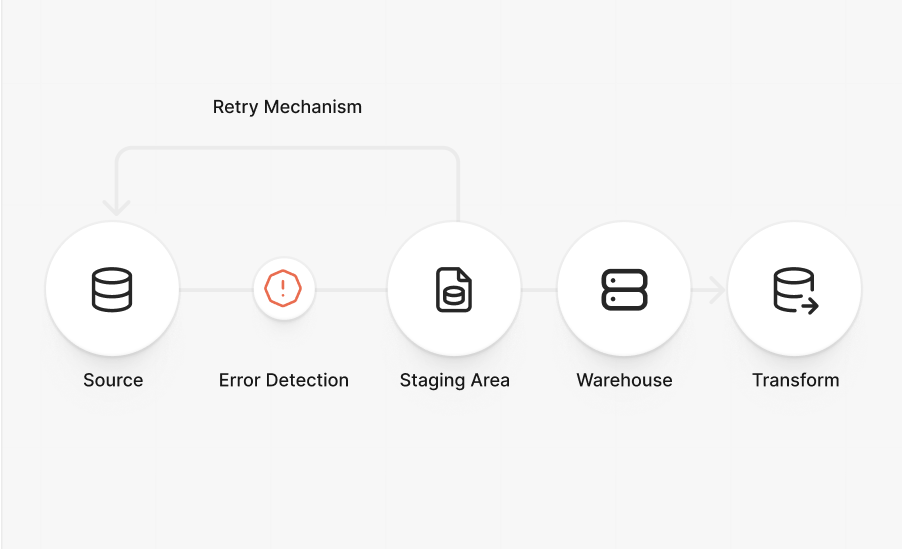
Every ETL platform looks reliable when data is clean, and APIs behave exactly as expected. The real difference appears when schemas change, API limits are reached, or a historical load is interrupted halfway through. These situations happen regularly in production and reveal far more than a successful demo.
During your evaluation, create failure scenarios intentionally and observe how the platform responds. Does it retry automatically? Does it resume from the last checkpoint? Can it recover without creating duplicate data? Reliability isn't measured by how often failures happen, but by how well the platform recovers from them.
We put these scenarios to the test by intentionally breaking pipelines to see how they recover in real-world conditions.

4. Evaluate the support, not just the SLA

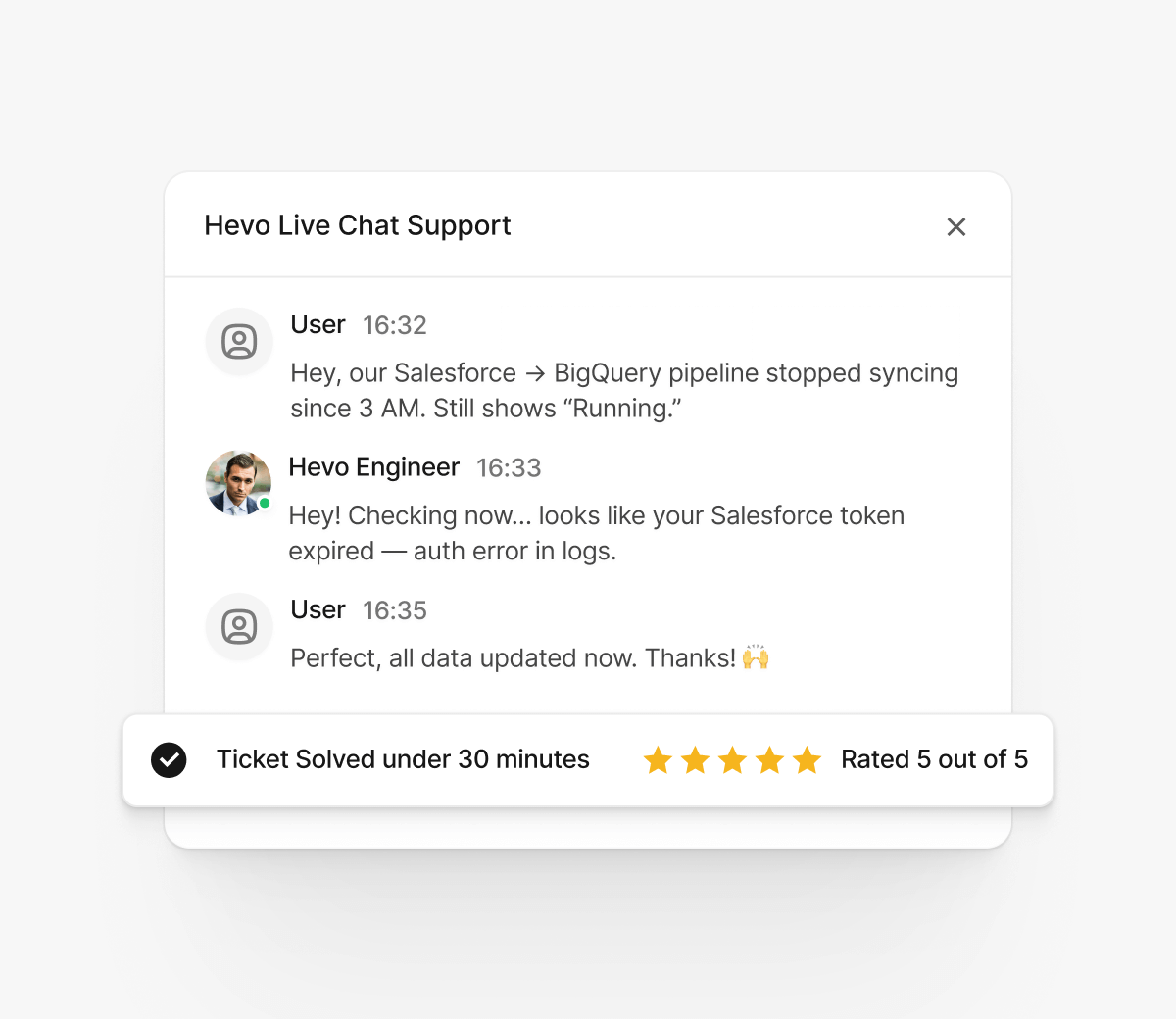
Support becomes important the moment a production pipeline fails. While response times are easy to compare, they don't tell the whole story. A one-hour SLA has little value if your issue spends hours moving through multiple support tiers before reaching someone who can solve it.
Look beyond support hours and response commitments. Find out who actually handles complex issues, whether engineers are involved, and how proactive the vendor is in identifying pipeline failures. For mission-critical workloads, good support reduces downtime, not just ticket response times.
See how Collectors found the right balance of reliable pipelines, responsive support, and predictable pricing with Hevo.

5. Think about the cost of operating the platform

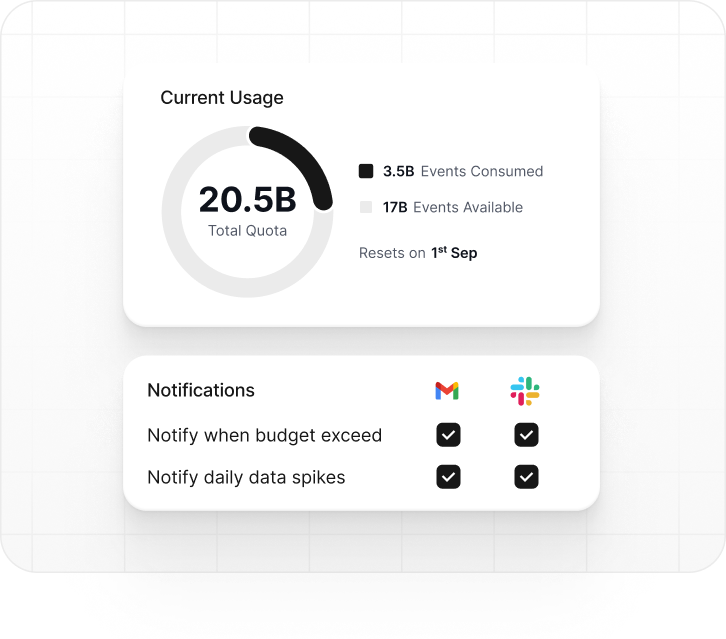
The monthly subscription is only part of what you'll end up paying. Engineering time, infrastructure, maintenance, downtime, and the effort required to onboard new data sources all contribute to the total cost of ownership. Even pricing models that look inexpensive upfront can become expensive if you're constantly paying for connector add-ons, overages, or engineering effort to keep pipelines running.
When comparing platforms, look beyond the pricing page. Understand what drives your bill, whether pricing scales with actual usage, and how much operational effort the platform removes from your team.
Curious what your ETL costs could look like? Estimate your spend in minutes with our Pricing Calculator and compare it against your current solution.

The takeaway

The best ETL platform isn't necessarily the one with the fastest benchmarks, the largest connector catalog, or the lowest starting price. It's the one that continues to meet your needs as your data ecosystem grows.
The next time you're evaluating ETL platforms, look beyond the feature list. Ask about connector quality, custom connector turnaround time, cost per throughput, support capabilities, and the total cost of ownership. Those answers will tell you far more than a sales deck ever will.
Ready to evaluate your options with confidence?

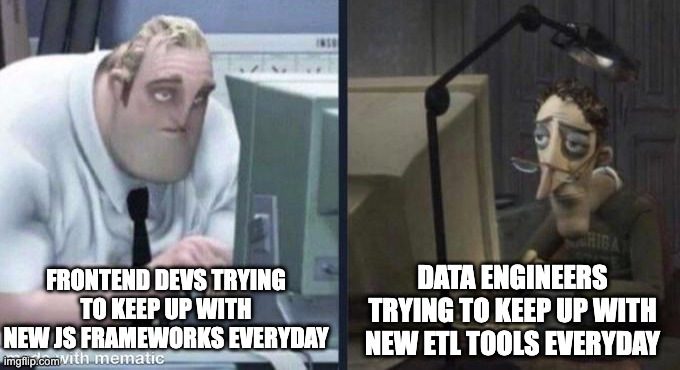
A dash of data humor


Become part of a growing community of data leaders including Matt Forrest, James Serra, Amney Mounir, and Mark Freeman, and get recognized for the work you're doing. Applications are now open.
Until next time!

Make better data decisions.
Starting with the next one.