Inside Snowflake Summit 2026: What Data Teams Should Know
June 1, 2026
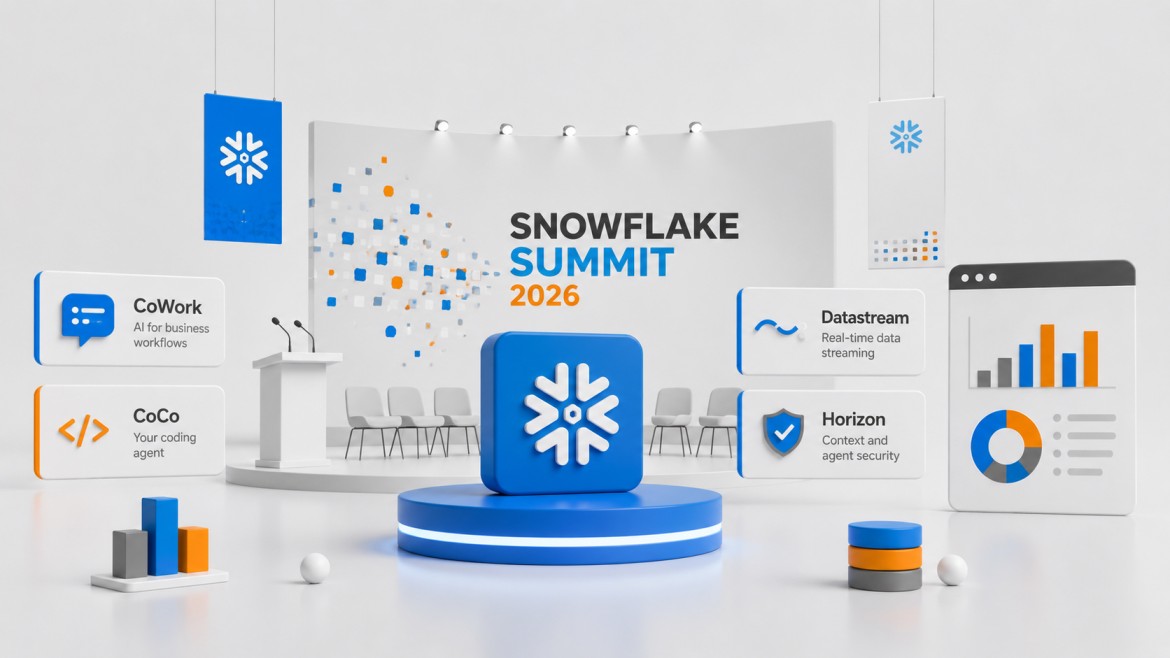
It was snowing announcements at the Snowflake summit 2026! From CoWork and CoCo to Datastream and Managed Agents, Snowflake announced updates across nearly every part of its platform. But beneath those announcements sat a broader vision.
Snowflake is building toward a future where data pipelines, analytics, AI applications, and business workflows operate within the same ecosystem. Many of this year's launches were pieces of that larger puzzle.
Before we dive in, every month we break down the biggest developments in data engineering, analytics, and AI, with practical takeaways for data teams. Join 18,000+ data professionals here!
The Big Idea: The Agentic Enterprise
Sridhar Ramaswamy kicked off the Summit by focusing on where enterprise AI is headed next. Today's agents help people get work done, but in the near future, agents will increasingly operate on their own, working across teams, systems, and business processes.
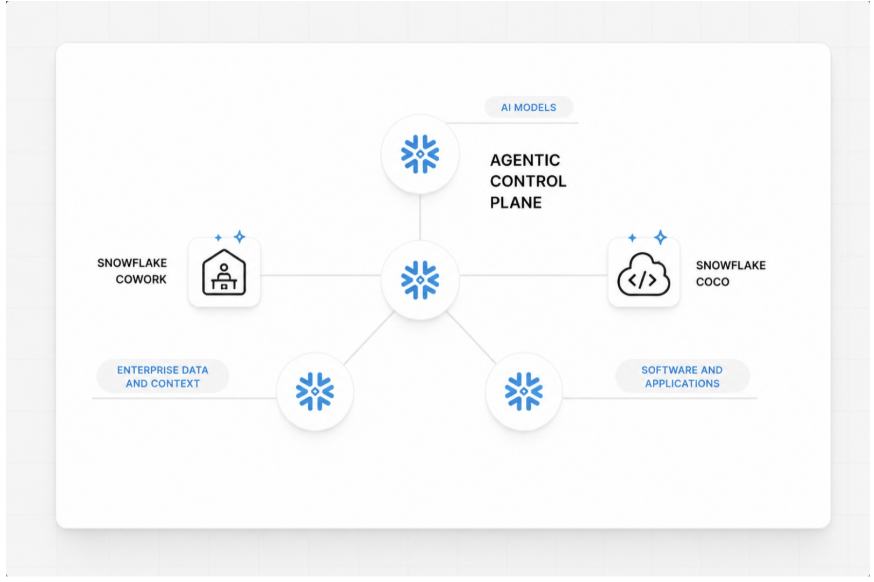
Snowflake's answer to that is a four-part framework: enterprise data and context, AI models, business applications, and an agentic control plane that coordinates across all three. That fourth piece is the one most companies haven't figured out yet, and it's where Snowflake is placing its biggest bets.
Snowflake Intelligence is now CoWork!
Snowflake Intelligence got a meaningful expansion and a new name at Summit: CoWork.
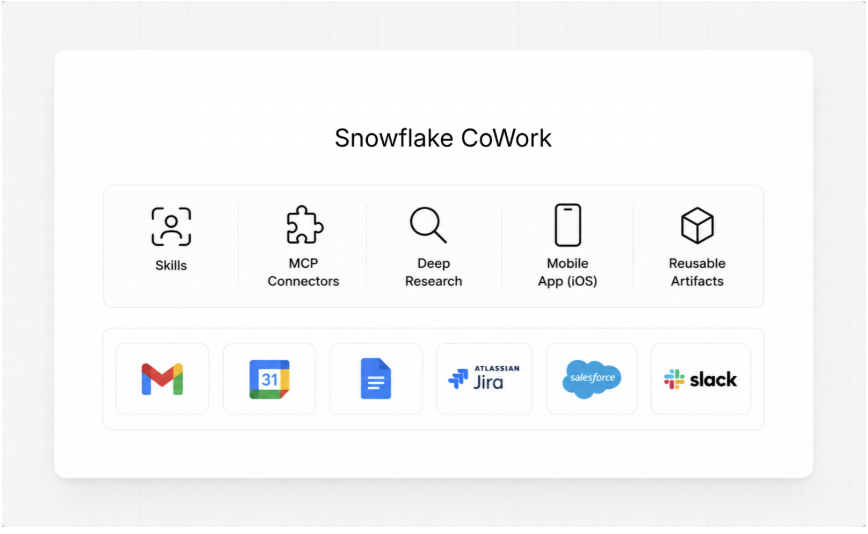
It now reasons across structured and unstructured data, automates recurring workflows through User Skills, and takes action inside Slack, Gmail, Jira, and Salesforce through MCP connectors. The real star? It’s the accuracy jump! CoWork with Cortex Sense hit 83% on complex enterprise queries versus 47% without it and 23% for generic frontier agents.
If you're curious how these agentic workflows are actually built on Snowflake, this recording will walk you through Cortex Analyst, Cortex Search, orchestration, and real-world agent development.
CoCo: The Coding Agent That Now Lives Where You Work
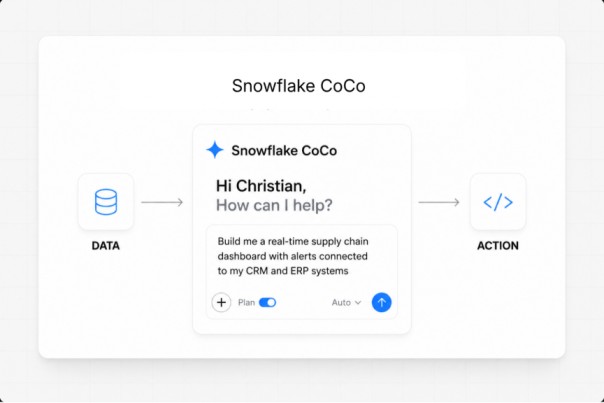
Cortex Code got a new name too: CoCo. And it came with a lot more than a rebrand! CoCo Desktop launched as a generally available native app, and CoCo now reaches builders through mobile, Slack, VS Code, Excel, Claude Code, and 40-plus IDEs.
The real headline? CoCo can take a legacy migration from six months to six days, handling everything from code conversion to deployment in a single conversation.
But the more interesting angle is that CoCo is designed to bring pipeline creation within reach of analysts and business users, not just engineers, which changes who can actually build on Snowflake.
The engineering time that gets freed up is better spent on the data quality and modeling work that makes everything downstream more useful.
Snowflake announced its intent to acquire Natoma, bringing MCP-powered connectivity directly into the platform. On the surface, it's a way to connect AI agents to tools like Gmail, Slack, Jira, GitHub, and Microsoft 365. Underneath, it's really a governance play.
As more employees start using AI agents to search, summarize, update records, and trigger workflows, companies need visibility into those actions. Natoma gives Snowflake a way to apply the same governance principles used for data to the actions agents take across business systems.
The Missing Layer Between AI and Production: Horizon Context and Agent Security
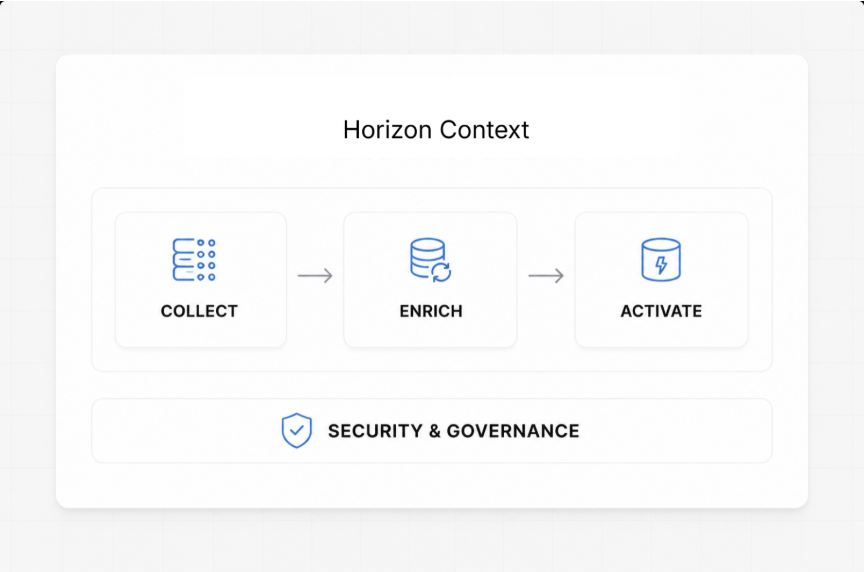
Horizon Context is Snowflake's answer to one of the most common reasons AI projects stall between proof of concept and production: agents' reasoning over inconsistently defined data.
It creates a shared semantic layer so every agent, app, and team draws from the same business definitions across the entire data estate, including external BI tools and Snowflake Marketplace datasets.
Sitting on top of that, Agent Identity gives every agent a verified cryptographic identity, per-agent RBAC, and a full audit trail, while real-time data exfiltration policies block violations as they happen.
Datastream: The Streaming Piece Snowflake Was Missing
Snowflake launched Datastream, a fully managed Kafka-compatible streaming service that writes real-time data directly into Snowflake tables. For teams running Kafka-to-warehouse pipelines across separate infrastructure, this is the consolidation path they've been waiting for.
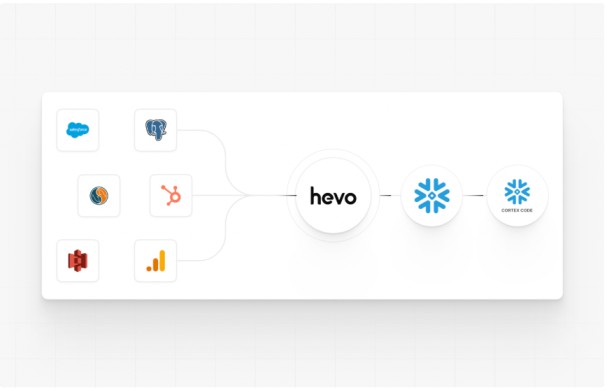
The bigger challenge for most teams is however upstream: getting data from 150-plus sources, SaaS tools, databases, and APIs, into Snowflake reliably in the first place. That's the problem Hevo solves before Datastream even enters the picture.
Snowflake's center of gravity is shifting. Data warehousing remains the foundation, but the focus is increasingly on everything that sits above it. AI assistants, coding agents, governance layers, semantic context, and application connectivity all point to the same goal: making Snowflake the place where enterprise AI comes to life.
As Daniela Amodei put it: build for what models can do today, but design toward the biggest version of what you want, because what looks ambitious now will look conservative in eighteen months